
In Part 3 of this series, I will focus on the aftermath of Salomon’s rebellion, and on his granddaughter Olga. I have been fascinated by her life history ever since I learned about her. That was in 2016, as I shared in I Want This in Writing (2026).
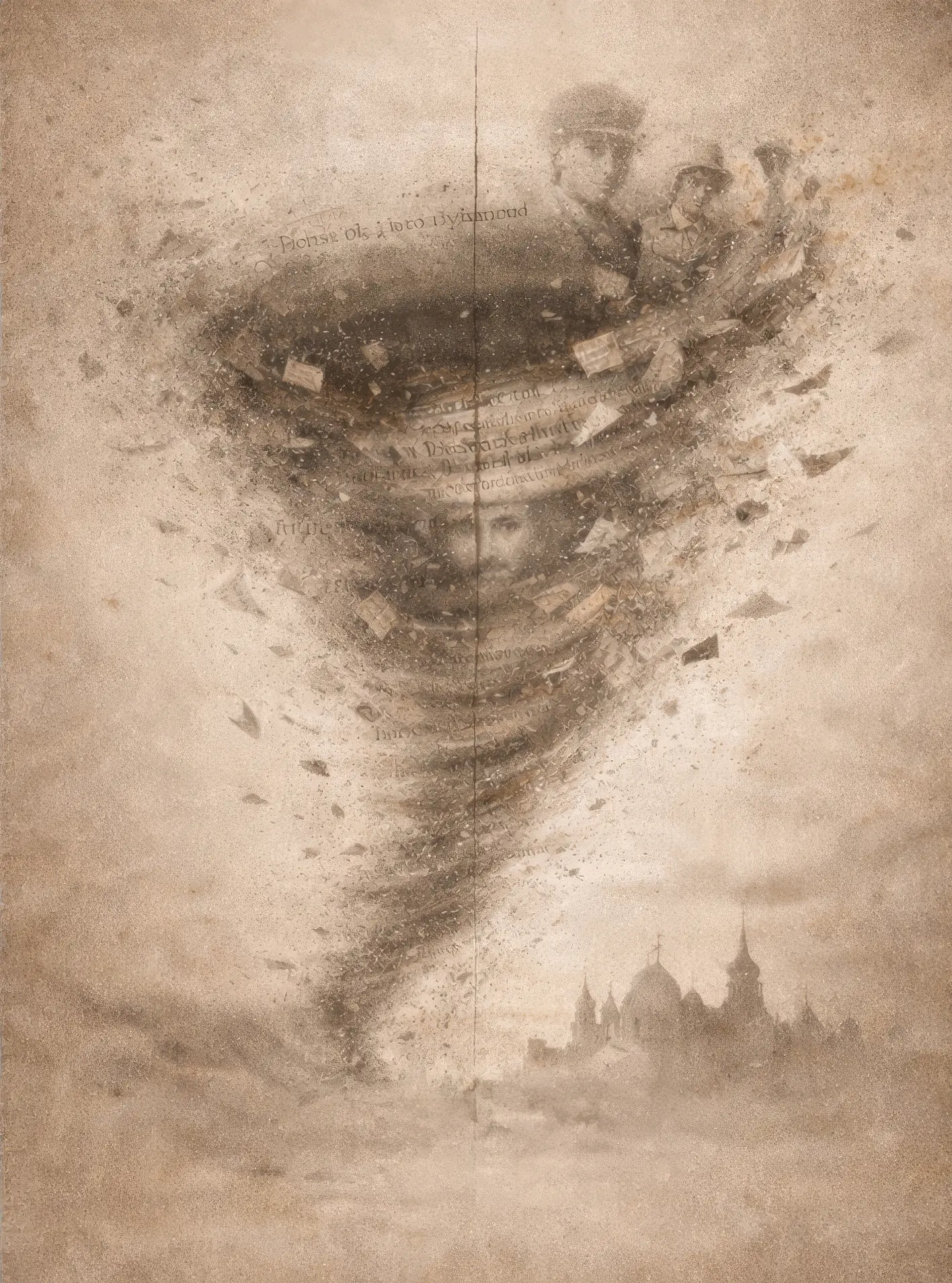
A quick reminder of the main characters: Salomon and Matityahu are the two Rubin brothers estranged following the herem placed on Salomon. Isidor is Salomon and wife Malka’s only child to reach adulthood. Isidor married Alma Lowenstein. Nathan Lowenstein, Baron of Opoka, is Alma’s brother. Olga is Alma and Isidor daughter, and as well Salomon’s granddaughter. She is married to Stefan Horoszkiewicz. Maria and Andrzej are their children. Moshe Rubin (a.k.a. The Old Man)is Matityahu’s great-grandson. He is my grandfather. They were all born in Galicia, under the Austro-Hungarian empire. They also lived there most of their lives. Galicia is now divided between Poland and Ukraine.
At the conclusion of Part 2, we looked at Salomon’s life following the herem imposed by the religious establishment, following the family’s herem. There’s no information about his wife’s life over that period. It is speculated that Salomon and Malka lived separately. Three of their children died in infancy. The fourth, Isidor, died in 1901, fourteen years after his suicide attempt. Salomon died in in 1910.
At this point, the legacy of the rupture and herem between the Rubin brothers, Salomon and Matityahu, is in full bloom. Matityahu (Mates) Rubin’s descendants adhere to Jewish orthodoxy and traditions, while Salomon Rubin’s gradually drift away to and assimilate into Polish society.
Salomon’s only son surviving into adulthood, Isidor, and his wife Alma have two daughters together: Irma-Ottilya (b. 1882) and Olga (b. 1886). Irma-Ottilya dies in 1900, and Isidor dies a year later. From 1901 onward, Olga is Salomon’s only living descendant. In 1907, she graduates from Krakow’s Jagiellonian University (JU), becoming one of the first Jewish women to earn a medical degree in Poland. Olga began her studies in philosophy but eventually shifted her focus to medicine. She receives an MD degree.

After Isidor’s death in 1901, Olga’s Uncle Nathan became Olga’s legal custodian. And I guess that under his influence Olga changes her academic direction.
At the conclusion of her medical training, Olga spends two years as a post-doctoral scholar at the Kaiser Wilhelm Institute in Berlin under the supervision of famed scientist Prof. Carl Neuberg. They publish research papers together. Olga is a rising academic star.
At the onset of World War I, Olga volunteers to help in military hospitals. She is honored with a medal.
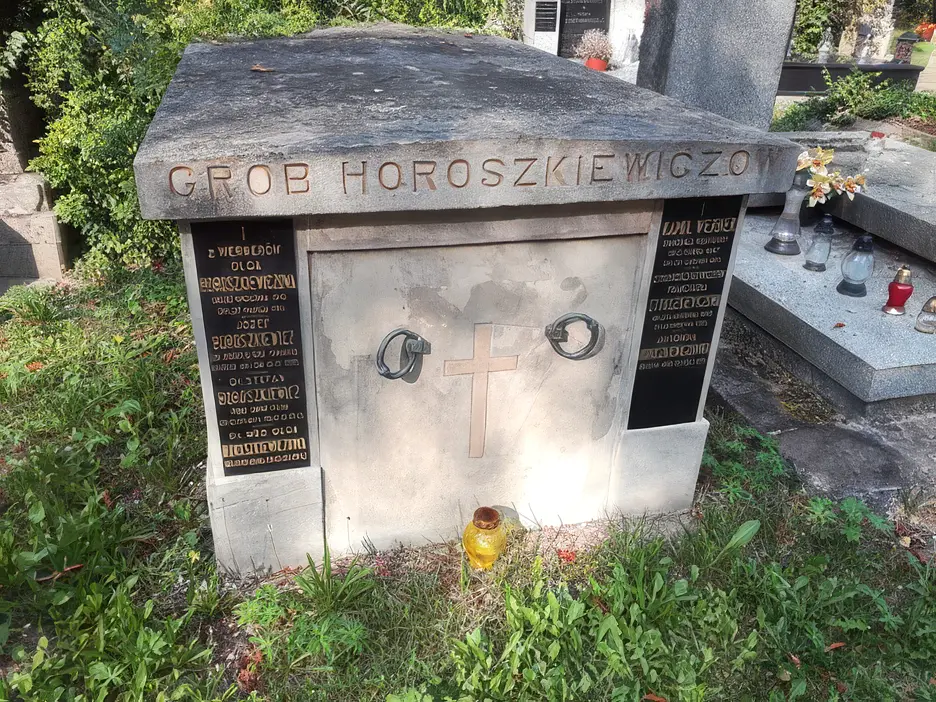
In 1916, after serving in Military hospitals, Olga marries Prof.Med. Stefan Horoskiewicz, a professor of forensic medicine at JU. On the morning of the wedding, she is baptized and converts to Christianity.
None of Matityahu’s descendants attend the wedding.
Soon after their wedding, Olga and Stefan move to Poznan in western Poland, where Stefan is appointed professor and head of the Dept. of Forensic Medicine at the local university. Olga works as a pediatrician for elementary schools run by the Ursuline Sisters, a Catholic Order.
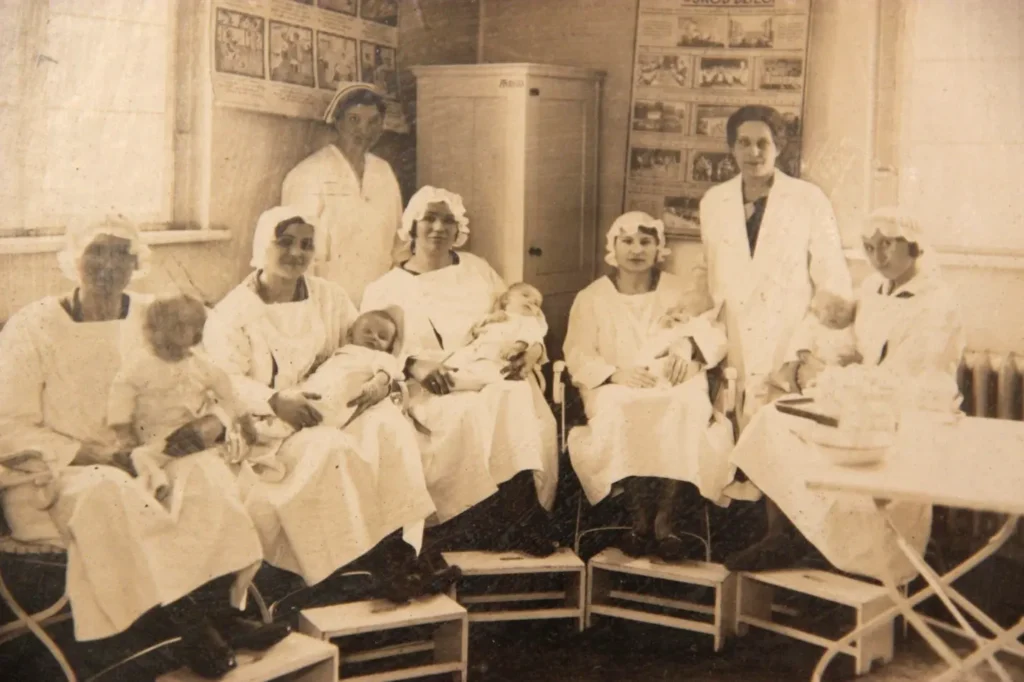
Olga gives birth to Maria (b. 1917) and Andrzej (b. 1919). The children attend catholic schools.
At this stage, Salomon’s branch of the Rubin family appears to be drifting away from their Jewish heritage. Still, Olga maintains close relationship with her Jewish relatives (Alma and Nathan’s side of the family).
History, however, has its own plans.
On the Run
By 1939, Salomon has only three surviving descendants: Olga and her two children, Maria and Andrzej.
Olga’s contemporaries among Matityahu’s descendants include, among others, my grandfather, Old Man Moshe Rubin, and his three children. They all reside in Lwów (today Lviv, in Ukraine).
Once Nazi Germany occupies Poland in 1939, the paths of the two Rubin branches diverge further. For a brief period, they seemd to converge.
Moshe and his children live in the Russian-occupied part of Poland, in the east. They feel safe. The Jewish community thrives under the Russians.
Olga, living close to the Polish-German border, is terrified. She has no illusions about the German intentions. She is fluent in German and has many contacts in Germany, from her days there as a post-doctoral researcher in Berlin. Her post-doctoral advisor, Prof. Neuberg, was forced out of his position and had to escape Germany.
Olga rushes her family out of Poznan as soon as the Nazis cross the border into Poland. They head to eastern Poland, seeking safety under the Russian occupation. And they pause in Lwów.
And no, there’s no family reunion. Over their five months in Lwów, there is no contact between Olga and Moshe.
In early 1940, tired and exhausted by the miserable living conditions in Lwów, away from (known) family and friends, Olga leads her family in a dangerous trip, smuggling their way back to Nazi-occupied zone.
Stefan settles in Krakow. Olga works as a nanny in a family farm estate near Krakow. Her children live nearby.
By mid-1941, the Nazis renew their march to the east, heading to Moscow. They gain control over Lwów. All the Rubins now live under Nazi occupation: Moshe’s family in Lwów, whereas Olga’s family lives in and around Krakow.
1942
By mid-1942, all the Rubins face mortal danger: Herem or not, the Nazis want them dead. All of them—whether they are baptized Catholics, practicing Jews and anyone in between.
After spending a year under Nazi occupation and enduring years of intense antisemitism, Moshe comes to understand what the Nazis intend for the Jewish people. He decides to act. He acquires false Aryan identification papers for everyone in his close family through the vast network of connections with church archivists from his many years of working as an antiquarian. My father is now Tadeusz Mieczyslaw Panko. Shoshana, his older sister, is Zofia Kubalik. And Hava, the youngest sibling, is now Eva Lechowicz. Moshe Rubin, a.k.a. The Old Man as we used to call him in my birth family circle, is Julien Mielniczuk.
The Old Man then sends his children and his second wife away from home. He also leaves Lwów and works as a night watchman in a monastery. By day, he sells butter on trains which he carries under his coat.
By late 1942, they live separately and under assumed identities, scattered all over Nazi-occupied Poland.
They all survive the war, except for Paula, The Old Man’s second wife.
Olga is aware of the danger. Daughter Maria keeps informing her of the growing signs of trouble. A family of converts is murdered in a nearby town.
And years before that, she experienced Poznan antisemitism up close and personal. For the Poznan press, she was a real catch: Jewish (she was not one), Freemason (she was not one), and a pediatrician for Christian children (that one is true).
And she escaped from Poznan as the Nazis approached, right?
She does not take similar, defensive steps.
Does she hope that her conversion and maintaining a low profile will shield her? There could be a bit of that. It is common thinking among Catholic Jews.
But there’s more.
She cares deeply for her family.
Husband Stefan lives in nearby Krakow and suffers from a debilitating drug addiction following the trauma of the early days of the war, which he spent in the Poznan morgue. He is aware of the challenges facing Olga and the children, but he is incapable of helping them. He needs help.
And there’s the children to worry about. Olga is torn. The complicating factor: by Nazi racial laws, the children are NOT targets of Nazi persecution: Two of their grandparents (Stefan’s parents) are not Jewish, and no one in the family has been involved in Jewish community activities.
But the children’s beneficial position on the Aryan racial hierarchy does not shield her.
And while the Jewish factor does not threaten her children, Olga is worried about her son’s black market foreign currency activities. Both Olga and Stefan want to keep close watch over him.
Olga is offered a secure hiding place in Warsaw by her friend, famed Polish-Jewish scientist Ludwik Hirszfeld (who survived the War while in hiding).
Olga’s son, Andrzej, advises her to decline Ludwik’s offer, and consequently, Olga rejects the offer, despite its potential to save a life.
Arrested
Olga is arrested by the Nazis in mid-June 1942 while living with her son. It is early morning when the German gendarmes knock on the door. It is not part of their run-of-the-mill Judenjagd [Jew Hunt]. The Germans know where to find her. Olga was denounced.
Son Andrzej eyewitnesses Olga’s arrest and reports (in his interview to the Shoah Foundation Institute) the following exchange between Olga and the German gendarmes:
“Sind Sie Jude?” [Are you Jewish?]
Olga denies.
“Sprichst du Deutsch?” [Do you speak German?]
“Yes, yes, yes.”
“Wo sind Sie geboren?“ [Where were you born?]
Olga answers that she was born in Lwów.
“Sag sie nur die wahrheit [Just say the truth], alles wird gut Sie [all will be good for you].”
Olga confirms that she is Jewish.
The gendarmes inform her:
“You, ma’am, are not arrested; you, ma’am, are captured.”
Being captured implied that she is viewed as a fugitive, and that, under the orders of the Generalgouvernement, means the worst.
Son Andrzej is not arrested.
Olga is executed a month later, July 1942, shot to death while standing on a wooden plank atop a mass grave.
The irony: The Orthodox Jews erase Salomon and his descendants, Olga included, from Judaism. A few decades later, the Nazis force Olga to reconnect with her Jewish roots—brutally. They do not care about herem, nor do they care about her conversion and baptism.
Post-Mortem Failure Analysis
According to Nazi ideology, Olga’s life was in danger regardless of the rabbinical herem on her grandfather. But the herem formed the background against which later decisions were made. It created the trajectory that separated Olga from the Matityahu branch, leading her to a different social world: the rarified world of wealthy, assimilated Jewish families who maintained close contacts with Europe’s secular, non-Jewish community. Salomon’s descendants were citizens of the Austro-Hungarian Empire. They were politically connected and influential. Olga, specifically, was a progressive social activist and student leader at her university, and later a pediatrician. She was an upright citizen, volunteering at military hospitals during WWI, marrying a JU professor, and converting.
Olga and her family belonged. Galicia was their promised land.
Matityahu’s descendants, on the other hand, were of a different mindset. They did not “belong”. The Ukrainians made it amply clear for them, day in and day out.
How Spinoza Avoided a Crippling Herem
Could Salomon have chosen a different course of action, one that could have altered the tragic course of events for his family?
This can be traced back to Spinoza, who, after enduring a severe herem, may provide insight into the question at hand.
He ensured his philosophical ideas would endure and relieved those around him from hardship by following five rules:
Spinoza Rule #1: Avoid compromises that water down your ideas and confuse your followers.
Spinoza Rule #2: Accept that you cannot shake the foundations of Judaism while maintaining a cordial relationship with the Jewish community.
Spinoza Rule #3: Avoid isolation. Find a community that is interested in your views, a community of peers that challenges you intellectually and helps you develop and test your theories. Communicate in this community’s language (hint: it is not Hebrew).
Spinoza Rule #4: Secure your financial independence.
Spinoza Rule #5: Forget about having a family. If you want a family, see Rules 2, 3 and 4.
Salomon knew the potential for negative consequences: He translated Gutzkow’s Uriel Acosta to Hebrew in 1856, and he was fully aware of Uriel’s severe punishment. He also knew Spinoza’s biography well.
The writing was on the wall, but Salomon chose to ignore it.
Let’s return to 1856. Salomon is in his early thirties. The family herem is in effect, strictly enforced, and the rabbinical one is brewing fast. Salomon is still young enough to change course. He can seek the embrace of his family and/or of the Jewish community. Alternatively, he can follow Spinoza’s Rule #3 and discover a group of like-minded individuals who are open to his ideas. There is such a community, and it is known as the Haskalah [Jewish Emancipation].
But unlike earlier maskilim [members of that movement] who intentionally communicated in German or Polish, Rubin insists on working in Hebrew, although he speaks fluent German, French and Latin. But he chooses Hebrew because he wants to communicate modern science (including physics, biology, chemistry, geology, evolution, and philosophy) to the Jewish community, especially its young people. His loyalty to Hebrew is not rewarded. The rabbis view it as a threat.
Salomon also breaks Rule #2. He is staunchly confrontational, fiercely attacking Orthodox Judaism and Jewish leaders. He is blunt. He compensates for his inability—or even refusal—to change, with an ever-growing sense of sarcasm and vitriol. As discussed in Part 2, he publishes a book titled Praise of the Fools: The Newest Testament of the Faithful Long-eared.
Long eared? Yes, he meant donkeys.
Who are the Faithful Long-eared? Yes, you guessed it.
So, no, Salomon did not follow Spinoza’s rules of survival. I believe there were two reasons for this: family and mental disposition.
Family: Salomon faced a critical and complicated period; his birth family had abandoned him, while his wife Malka preferred to stay near her family. Salomon found himself facing a dilemma between seeking reconciliation and maintaining family harmony, while remaining committed to his ideas.
Mental disposition: Spinoza and Salomon Rubin were wired differently, which led them to react differently to the herem. Spinoza internalized the ḥerem, thus neutralizing its effect on him. By the time he was formally excluded from the Jewish community, he had already withdrawn from it—intellectually, emotionally and socially—thereby significantly lessening its impact. He preempted the herem by a state of detachment. And he still had silent support from his family.
For Salomon, the situation was different. Unlike Spinoza, his ḥerems—both from his family and the rabbis—did not confirm a separation that had already happened. Instead, he was exiled from a life he still claimed and wanted. He must have had serious cognitive dissonance, remaining entangled—emotionally, socially, and intellectually—with his community, also the source of his injury. Yet he could not muster the energy needed to completely break away. He hesitated at the crucial moment when he should have walked away and accepted his losses. As a result, he reacted to the situation instead of taking control of it. He lived his post-herem life as a victim—not by choice, but by default.
And this lack of agency was, to some extent, his legacy.
Olga was not the victim of her grandfather Salomon Rubin’s legacy, nor can her fate be traced to it in any direct or causal sense. The forces leading to her murder belong to a far more extensive and darker historical machinery. And yet, her personality was partly shaped by Salomon—her disposition echoed the tension he embodied between action and inaction, insight and restraint. Olga inherited a worldview optimized for integration into European society rather than survival outside it. The Salomon branch believed that institutions could protect them. They had confidence in European civilizations. They believed that education mattered., status, citizenship and respectability, they all mattered.
The Matityahu Branch did not.
These differences resulted in varying assumptions about danger, levels of societal trust, and approaches to self-protection—shaping instincts for survival, concealment, and reinvention.
This distinction is historically crucial in Eastern Europe. It led to different reactions to Nazi persecution.
Olga’s was a tragedy of overconfidence in European civilization.
And then there’s also Olga’s determination to keep her family together to consider. It was, at least in part, a counterreaction to the family breakup that had occurred two generations earlier. Having grown up with her grandfather in Kraków, she saw firsthand its consequences.
The result of the two brothers’ separation was not simply estrangement; it produced two distinct ways of meeting the world. For Salomon’s descendants, inward dissent did not always harden into action. For Matityahu’s descendants, there was no such thing as hesitation—when danger came, they fought to survive. And what in one century was a matter of different temperaments became, in another century, a matter of life and death.
End of a Herem
With Olga’s murder by the Nazis, the last Rubin on Salomon’s side with any knowledge of the other side of the family was gone. On Matityahu’s side, my grandfather knew about the connection and even mentioned it in writing. But he did nothing to revive it.
And no, the family estrangement did not end with Salomon’s demise. Like the butterfly’s effect, it worked its way through history, with strange twists and turns. For over a century, close to 170 years, the rupture between the two Rubin branches remained unhealed—until it landed at my feet.
I had not even known about this rupture until 2016, when I discovered that I had relatives—from Salomon’s branch, Olga Rubin’s grandchildren—in Poland. And no, they are not Jewish. In 2016, I, a descendant of Matityahu Rubin, met Salomon Rubin’s descendants in person, in Poland. This meeting closed a circle that had remained open since the 1840s. The ḥerem had finally come to an end.
Seen from this vantage point, the genealogy of this rupture becomes clear. Uriel da Costa challenged rabbinical authority and paid with despair. Baruch Spinoza did the same and was also expelled; however, he rejected the community that rejected him, building a new intellectual world. Salomon Rubin attempted to restore Spinoza to Jewish thought and was excommunicated in turn—but his rupture was not complete, at least internally—which would affect him for the rest of his life.
Their stories did not end there. The consequences of their actions traveled through ideas, families, and history itself, until descendants separated for over a century finally reunited. So, we ask again:“Can the flap of a butterfly’s wings in Brazil set off a tornado in Texas?” I would say that the answer is yes, but with some nuance: the butterfly itself is not to blame for the tornado, but its actions—no matter how tiny and long ago—may nevertheless be linked to it.
