
Prologue (2025)
Three women played significant roles in my father’s life. The only one I knew was my mother. It wasn’t until after his death, while sifting through his personal notes, that I discovered the other two women: Ms. Franceska [Franciszka] Mann and Mrs. Haber. My mother had no knowledge of these women and had never heard of them. My father had met the two “other” women during his teenage years, merely greeting them and observing from afar on occasion. He loved them both, much like one might develop an affection for a movie star. It’s likely they never noticed him, yet they left a lasting impression on his life. My father often felt awkward around women. Even in professional settings, like talking to his attorney, he would show a nervous habit: gently patting his head from forehead to neck, much like a mother soothing her child.
His unease came from guilt over not being able to help the two women in their darkest hours. Perhaps he felt that all women viewed him with disappointment. I wish I could have told him, “Dad, you were just a teenager, not a superhero. There was nothing you could have done.” Adding to the complexity was the discouragement of discussing these stories. In later years, people didn’t want to hear about Holocaust survivors.
The third woman, my mother, provided stability in difficult times, helping my father stay grounded. There is also a fourth woman to consider, my grandmother, who passed away when my father was six years old. Her absence in his life might explain the comforting head pat.
Here’s how it all happened.
Enters Fraulein Mann
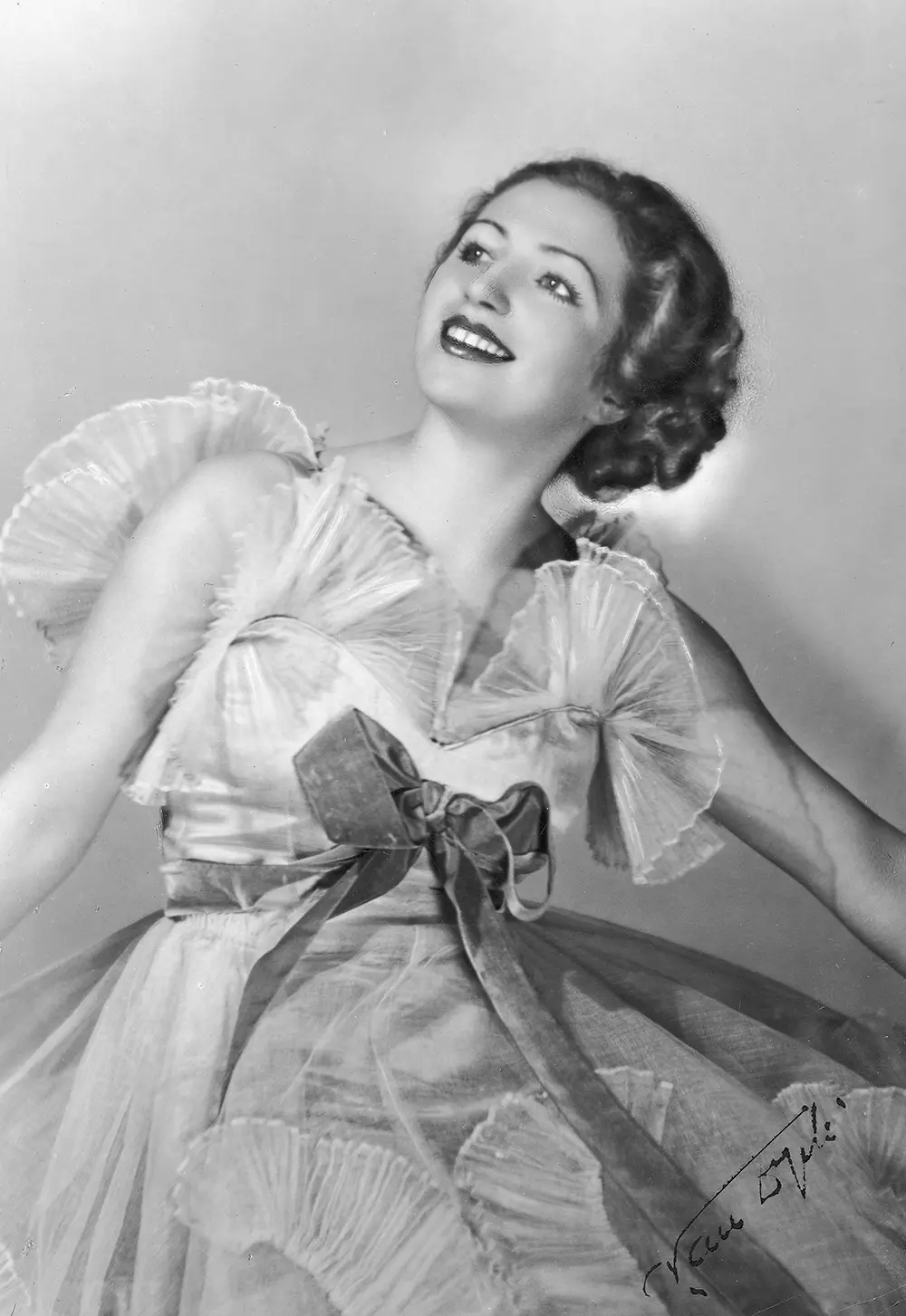
It is late October 1943 in Nazi-occupied Poland. As the clock chimes just past noon, another cold afternoon begins in Auschwitz. The sky is bleak and uniform gray, while the ground glistens with a thin layer of ice.
A passenger train rolls into Auschwitz train station, crawling along the platform before coming to an abrupt, ear-piercing stop. The station’s platform is almost deserted except for several officers in field-grey uniforms and SS insignia standing about idly. A few men in striped overalls and hats stand away from the rails. Everyone on the platform stares curiously at the train—it is not the usual cattle train … and the passengers are not wearing yellow stars or armbands … an unusual sight.
As the train doors slide open, a sea of well-dressed passengers pour out onto the platform. Men in tailored suits and coats adorned with ties and hats emerge alongside women in elegant winter dresses. Some are wrapped in luxurious fur coats and hats, displaying expensive jewelry. Even the children are dressed to impress.
What starts as a human trickle turns quickly into a human wave, a mix of people of all ages carrying suitcases and luggage. Many of the women hold children by the hands, and a few others carry babies in their arms. Some children get lost in the mayhem, and their parents struggle to find them, shouting Yosaleh, Haimke, Perla, and a lot of boze mój [My God, in Polish].
You might think these are tourists reaching their destination. Their expressions tell a different story. They look worried and confused. Some passengers approach the SS soldiers guarding the platform, showing what appear to be passports. Their questions receive polite answers and welcoming smiles. The men in stripes are astonished, realizing something unusual is happening.
The loudspeakers blast instructions in metallic voices, ordering the passengers to line up in columns of four and move toward a single-story structure with a sign proclaiming “BATHS” in large gothic font.
One person stands out in the large human wave: a woman. She wears a red coat, a matching scarf wrapped stylishly around her neck, and red high heels. She has long, wavy blond hair and wears vivid red lipstick.
As she steps out of the train car, a man in striped clothes rushes to offer his hand to help her with her luggage. An SS officer pushes him away roughly. Recognizing his offender, the man removes his striped hat deferentially and says, “Jawohl, Oberscharführer Schillinger.”
Schillinger stands tall and imposing, his broad shoulders stretching upward toward the sky. His short-cropped blond hair peeks out from under his black hat, shining in the sunlight peeking through the clouds. He has always exuded a rugged charm that makes heads turn wherever he goes, and he looks especially intimidating today in his Hugo Boss crow-black uniform. Schillinger swings his club back and forth and smiles. He pauses, then hands his weapon to a nearby guard. His smile turns into a broad grin as he approaches the woman in red. Finally, something to bring some joy to this dreary day, he must be thinking.
“What is your name? Where are you from?”
“Fräulein Franceska Mann, enchanté,” she replies playfully. Picture her with a cigarette holder, and you might think Greta Garbo has arrived. “And I am from Warsaw, mein Herr,” she adds. She offers her white-gloved hand for a kiss, but the offer is declined.
“You will call me Oberscharführer. I am SS-Oberscharführer Schillinger.”
“Of course, SS-Oberscharführer Schillinger.” She reaches into her shoulder bag and pulls out a Japanese-style fan, nervously waving it in front of her face.
“Your papers, please.” Franceska pulls a folded, brownish card and offers it for inspection.
“Here is my passport, Oberscharführer Schillinger…”
Schillinger looks at it, then says, “Honduran citizen, You’re one of those lucky ones.”
“Yes, Herr offizier, but there is some confusion here…”
“I know. You are the folks from the Polski Hotel. Profession, liebes Fräulein?” Schillinger asks, sounding less officious. Men in stripes shuffle back and forth nearby, maintaining a safe distance from Schillinger.
“I am a professional dancer.”
Schillinger nods his head in appreciation. “I thought I recognized you. Yes, yes, of course, you are the famous Jüdin [Jewess] Mann. Die Jüdin Fräulein Mann.”
“Fräulein Mann will do, mein Herr. And where did you see me before?”
Schillinger’s formal demeanor vanishes as he confesses, “In Warsaw, I saw you performing ballet and cabaret a few times… your Steptanz [Tap Dance in German] is wunderbar.
“The Tupanki! [tap dance in Polish],” she interjects with a wide grin before launching into a short and lively routine of the tap dance. A couple of children walk by. Their expressions shift from surprise to delight as they witness Franceska’s impromptu performance. They giggle. Their mother pushes them to move forward. The men in stripes have told them to stay away from Schillinger.
“I remember seeing you at the Femina Theater… and I also saw you at the Sztuka. You arrived there in Officer Spilker’s car. You did not wear the white-and-blue armband. Officer Stabenow—” Schillinger says as he clicks his heels— “he ordered us to leave you alone.”
Meeting the world-famous dancer has brightened Schillinger’s mood. What a great story to tell the boys at the barracks, he is thinking.
“That evening at the Sztuka, Dei Jüdin Vera Gran sang ‘Her First Ball.’ Der Jude Szpilman accompanied her on the piano. I remember the first few words…”
“Go on, Oberscharführer…”
Schillinger starts humming:
“It’s my first ball …
This is a waltz for lovers…”
He stops here, and Franceska chimes in, singing in her very pleasant mezzo-soprano.
“My unforgettable ball
The colorful crowd trembled
It was the first ball
Rocked by this waltz…”
She enhances her singing with a couple of elegant waltz movements, hoping to entice Schillinger to dance with her. He looks around cautiously. Is he going to…? But no, of course not.
“Oh, what a romantic spirit you are… Oberscharführer. About that passport…” and then she adds, “How much longer will we be staying here, Oberscharführer Schillinger? We were supposed to be in Switzerland by now. I’m tired, and I need to freshen up.”
She looks doubtfully around the station, fanning herself rapidly.
Schillinger hesitates, a forced smile stretching across his face.
“Oh, no worries, this is your last stop before crossing the border to Switzerland. The Swiss authorities insist that each one of you must be disinfected before crossing the border. And then you will have some time to rest. Tomorrow morning, your train will leave for Switzerland.”
Schillinger points to the queue of women forming in front of the big BATHS sign. He snaps his finger at a couple of young men in stripes standing nearby. They approach him and acknowledge Franceska with a slight nod. Schillinger orders one of them to carry Franceska’s suitcase. He mumbles briefly into the man’s ear and gestures the other away.
Mrs. Haber’s Shoes
A couple of years earlier, in the summer of 1941, a few days after the Germans had invaded Lwów, cautious optimism was slowly replacing fear. Lwów’s Jews were full of hope. Perhaps the Ukrainian pogrom celebrating the Russian departure was a one-time event that had taken place during that lawless interregnum period, and the Germans would restore order. For Germans, it is Ordnung über alles [Order above all], right?
My father Artur, who was sixteen years old at the time, was helping his father, Moshe, aka “The Old Man,” in his recently reopened bookstore. The shop was bustling with customers from Warsaw and other towns in western Poland. Among the buyers were German officers and soldiers who browsed the books and, yes, even waited patiently in line at the cashier’s counter to purchase them, just like any other customer. Some even struck up conversations with the Old Man, asking about books banned in Germany and authors such as Arnold Zweig, Franz Kafka, Franz Werfel, Sigmund Freud, Heinrich Heine, Lion Feuchtwanger, Erich Maria Remarque, André Gide, and Romain Rolland. They did not know that the Old Man kept these forbidden books on the bookstore’s second floor, hidden from public display, and only those who gained his trust were allowed access upstairs—always accompanied by Artur.
Many years later, Artur recounted, “We did not relocate to the Ghetto.” By “we,” he was referring to his family: his stepmom, Paula, his two sisters, Hava and Rózka, and The Old Man. The reason, he explained, was that they felt protected by the German officer, Herr Struck, who lived at their home, occupying one of their bedrooms. Artur knew he was not Gestapo; his green uniform meant Army. He was also a pleasant guest, Herr Struck. The Old Man spent many evenings with him, chatting in German. They shared much in common: both were officers in Franz Joseph’s army during World War I and loved books.
Paula, however, was uncomfortable with the stranger in their midst. She complained to The Old Man, but there was no way he could order their resident German officer out.
As it turned out, Herr Struck was equally uncomfortable, and he arranged to switch places with the Habers—Mrs. Haber, her husband, and her parents—who lived one floor above.
“One early afternoon,” Artur continued, “I was at home with Paula and with Mrs. Haber’s parents. This was after Herr Struck had moved out and the Habers had moved in. The Old Man was at the store. The front door burst open, and Mrs. Haber stumbled inside, pushed forward by a German officer. The officer followed closely behind her, brandishing a gun and gesturing for us to move aside as he forcefully directed Mrs. Haber into her bedroom.”
“It was not Herr Struck,” Artur said. “We heard loud noises erupting from the bedroom, furniture being pushed around. There were muffled screams. We all understood German, and we heard the officer ordering Mrs. Haber around. We heard her crying and begging him to stop. It was a rape. We all knew that. We just stood there, frozen. There she was, behind the door, the woman of my dreams, Mrs. Haber, so beautiful, and I am just standing there… Objects fell on the floor, shattering into pieces. The chaos lasted only for a few minutes. Then, it became quiet. Dead silent. The bedroom door opened, and the German officer emerged, waving his gun in one hand and holding Mrs. Haber’s green high-heeled shoes in the other. He pointed his gun at us and walked backward toward the door, never taking his eyes off us.”
Paula then hugged Mrs. Haber’s mother, who had been sobbing the entire time. Her father, on the other hand, was quiet, his face twisted in pain. He covered his mouth with his hand to stifle a scream. As soon as the officer left the apartment, Mrs. Haber’s mother rushed into the bedroom and closed the door behind her. Then, the apartment fell silent.
Put on Your Dancing Shoes, Fraulein Mann
The news spreads fast. Whispers of “We have Franceska Mann here; she will dance for us” echo through the SS barracks in Auschwitz. The officers buzz with excitement at the thought of watching the famous Jewish dancer perform. SS-Sturmscharführer [squad leader] Quakernack, the officer in charge that night, decides he must watch the show. Schillinger, he thought, being Franceska Mann’s agent and trustee, must be there too and act as the conferencier. Oberscharführer Wilhelm Emmerich wins the lottery for the third slot. “What a show it is going to be,” the SS folks whisper, and the squad’s comedian adds that the grand finale will be like never before.
Meanwhile, the man in stripes, escorting Franceska and carrying her suitcase, whispers to her in Polish, “Panna Mannowna [Ms. Mann, in Polish], I am Szulim, Amcha [your people, everyday people, in Hebrew and Yiddish], I remember you from Warsaw… They are killing us here.”
Franceska’s face pales. She then shakes her head in disbelief. He is wrong, she thinks. He does not know about the deal with those holding foreign passports at Hotel Polski. “Where are you taking me?” She asks.
Szulim gestures toward a wooden hut next to the baths. “That’s where the staff stays during breaks,” he explains. “And those women standing on the stairs over there… these women rode the train with you. They won’t last another hour. The ‘Stairway to Heaven,’ that’s what the guards call these stairs.”
It is getting dark; there’s a constant downpour of ashes, and the smell of something unknown fills the air. Franceska reaches for her glasses, adjusting them until they sit comfortably on her face. She takes a moment to watch the women scattered along the long stairway; some have tears streaming down their faces while others cry out in despair. She looks at Szulim, puzzled. “They are praying,” he explains. Among the sea of distressed women, familiar faces catch her eyes. They had all stayed together at the Polski hotel in Warsaw for what felt like an eternity, waiting for the promised exchange with the Red Cross.
A woman near the top of the stairs suddenly recognizes Franceska and frantically gestures toward her with her hands stretched forward, cradling a small bundle in her arms. She is pleading with Franceska to take her child.
“Maybe you’ll be one of the fortunate ones,” Szulim remarks. “They let you keep your suitcase. That’s a good sign.”
“I should not be seen talking with you,” Szulim whispers into his sleeve as they approach the staff room. He takes off his striped hat and knocks on the door.
Schillinger opens the door with a wide swing, a welcoming smile on his face—almost like the conferencier in the Brussels dance competition she won, Franceska thinks. He welcomes Franceska and motions to Szulim to drop the suitcase. Szulim recognizes the other two SS inside the staff room, blanches, and turns his head away from Franceska. He then drops the suitcase, clutches his hat to his chest, bows, and rushes out. He decides to stay outside, a safe distance away, in the dark.
The staff room is a spacious square hall, ten meters in length, with a polished wood floor and walls. A large Nazi flag hangs on one wall, while a portrait of Hitler dominates another. A panel on the wall displays the names of SS officers on duty. Alongside the walls, several chairs are lined up, with a few comfortable black-leather armchairs beneath Hitler’s portrait. The room is poorly lit, and the windows, covered with a thick layer of dark grey dust, make it difficult to see outside.
Franceska walks elegantly into the room, surveying the three men with a smile. She notices they all look the same: tall, lean, and blond, faces carved of stone—Hitler’s dream boys.
Schillinger is now grinning from ear to ear. The other two men observe Francesca with curious eyes, their lids drooping slightly. It’s clear they have had too much to drink. The room reeks of alcohol, and a half-empty bottle of some clear liquid sits on the table, surrounded by empty shot glasses.
Schillinger makes a grand gesture to welcome Franceska, and she is relieved to see that he is not intoxicated. She walks toward him hesitantly, looking at the others in hopes of understanding the situation. Quakernack appears restless as he claps his hands and commands: “Tanz, Jüdin, Tanz [Dance, Jewess, Dance]!”
They are not here to show their respect for classical ballet, thinks Franceska.
Quakernack reminds her of the guards on the Chłodna Street pedestrian overpass in Warsaw. She’d watched them ordering old men to dance—bearded old Jews were their favorite targets. They’d hit the old men with their truncheons if they were slow to respond. And they loved pulling their beards. Friends had told her to ignore these street scenes. “These are different Jews,” they liked to say, “Don’t worry, we are different.”
“Oberscharführer Schillinger, would you please fetch my ballet shoes from my suitcase?” He is quick to comply. He is different, she thinks.
Franceska carefully removes her bright red heels and places them neatly aside. Her feet ache from wearing them all day. She takes a moment to gently massage them before slipping into her dance shoes. The familiar sensation of the soft ballet slippers brings her comfort. The last time she wore these shoes was at Nowy Azazel [New Hell, a mix of Hebrew and Polish, a club in Warsaw’s Jewish Ghetto].
Franceska wraps the shoe ribbons around her ankles and moves her feet back and forth to check the fit. The three officers are mesmerized, their eyes locked on her every motion. Franceska knows that look; she knows it is because of her beautiful, shapely legs. “Show them your legs,” Madame Irena Prusicka told her many times. “Men will go wild for your legs,” she would say.
Then, rising tall, she adjusts her hair into a perfect bun and quickly transforms her expression into a professional mask. She rolls the waist of her dress so the hemline falls above her knees. She takes a neutral position, holding her head high, showing her long, graceful neck. She closes her eyes and takes a deep breath. She is ready.
I’ll do Carmen, she thinks. It must be Carmen.
She scans the room, and her eyes settle on Hitler’s dour portrait. I’ll use his mustache for spotting, she thinks.
She begins her dance with a series of controlled movements emphasizing extension and balance. It is not time to fly yet.
Stay on the floor, girl, she decides as she executes her first développé. It comes out perfect.
Long neck, long neck, Madame Irena Prusicka used to remind her again and again. Where is she now, dear Irena?
Her left arm points upward toward heaven, and her right arm points to the right. Her arms stretch long, effortlessly. Her hands, shapely and white, give way to her fingers that, having a life of their own, hang loosely.” Her left leg points to the ceiling, extending far beyond the minimum requirement of 135 degrees. She points her left foot, directing her heel forward.
She follows her second and third développés with an adagio sequence, extending her arms and legs gracefully while carefully maintaining a stable core.
It is time to fly, girl, she decides as she cautiously tries her first grand jeté. It is flawless. Prusicka would love that. She stops briefly, realizing the hemline is too low. She pulls it up higher, taking a couple of hairpins off her bun, and bursts into a series of pirouettes.
Time to catch your breath, girl, she thinks as she prepares to perform an ensemble of arabesques. First, second, third arabesque. “I always loved the next two,” she says to herself, moving forward with the Arabesque Croiseé and the Arabesque Penché.
Then, she freezes.
Quakernack yells in German.
He is the dangerous one, she realizes.
Quakernack snaps his finger and slurs: “Schillinger,” he says, pointing at Schillinger, “what is the name of that dance they love so much in Paris?”
“It is the Can-Can,” Schillinger answers.
Turning his head to Franceska, Quakernack slurs: “Ja, Ja, Can-Can. Do the Can-Can for us, Jüdin.”
So, this is where it is going, she thinks. I’ll give them a couple of high kicks. But the shoes—ballet shoes? What would Prusicka say? I must change back into the high heels.
But you can’t do high kicks in high heels. She is paralyzed.
Quakernack decides for her. He grabs the high heels and hands them over to her. She accepts them, smiling her most professional smile.
It is never easy, girl, she thinks, remember what Szulim said. Just keep the beast happy.
Franceska stands up and tries a couple of high kicks. They do not work well; her shoes fall off her feet. She is exhausted.
Quakernack raises his hand, signaling her to stop. He then orders her to take off her clothes. “Nackt, Jüdin, nackt [Naked, Jewess, naked],” he orders.
Schillinger and Emmerich fall silent. Schillinger is surprised. He did not expect this. Oh, what the heck, he thinks, a bit of fun and then off she goes to the gas.
Franceska gracefully removes her jacket and hangs it on a nearby chair. With a mischievous smile, she asks Quakernack for help unzipping her dress. He stumbles over to her, struggling with the zipper before she takes over and finishes the task. Playfully teasing him, Franceska tosses her bra in the air. Quakernack tries to catch it, but he misses. He turns back to see her putting it back on. He lunges at her, arms outstretched.
That’s it, girl. It is Act 3; make Pana Prusicka proud, she thinks. She quickly grabs one of her red high heels and performs a stunning Arabesque jump toward him, stabbing the sharp heel through his eye. Quakernack screams in agony as blood pours from his wound, staining his uniform. Overcome with pain and shock, he stumbles around before collapsing to the floor. Taking advantage of the chaos, Franceska grabs his gun and shoots Schillinger twice before turning to Emmerich. In a state of panic and confusion, he attempts to flee through the door but is shot in the leg by Franceska.
She hears shots from outside. They are coming for her.
That’s it, girl, she thinks. This is the end of the line for you.
The door flies back open, and more gunfire lights up the room.
A few minutes later, the Lager Kommandant enters the room. He orders that Franceska’s corpse be displayed in the dissecting room of Crematorium 2 before being incinerated. He wants it to be a warning sign for the SS men, he says.
Epilogue
Following the War, Szulim and his friends and many other Holocaust survivors faced indifference and condescension. The abused women’s stories were ignored, including those of Mrs. Haber and Ms. Mann.
Endnotes
“A small directorial effort and she [Franceska Mann] would be Polish Clara Bow. She has the same tempting smile, graceful movements, sensual lights in the eyes, delightful legs, and in dancing she shows a lot of temperament and verve.”
“She is as if created for dance. She has perfectly beautiful and shapely legs, enormous dancing impulsiveness, and great artistic ambition, coupled with conscientious diligence.”
—Henryk Liński, Journalist and art critique (1935, 1938)
“…the awareness of a body that defied the laws of gravity. Intelligence and aggressiveness…”
—Ryszard Marek Groński, in David’s Slingshot, Cabaret in the Vestibule of Hell (2007)
“Mannowna [Franceska Mann] arranged for us those kennkartes [Nazi ID cards]. Mannowna passed to the Aryan side individually. She had the appropriate pass. She contacted Polish document forgers. She could help a lot and did so willingly. She was one of the most privileged in the ghetto. Rumors said that she was a Gestapo agent and the lover of the notorious General Stroop.”
—Edward Reicher, in Agnieszka Haska, 2016
“There was a huge commotion. After the shots were heard, dozens of SS came running from the barracks. The Camp Commandant came with them. A few SS stormed the staff room. We heard shots. Later they came out with several bodies on carts. The one carrying the dancer headed to the crematorium. Schillinger never showed up on the platform after that day. He was shot dead. We saw Emmerich limping around. He was shot in the leg. Quakernack lost an eye […] the shots served as a signal for the other women to attack the SS men; one SS man had his nose torn off, and another was scalped.”
—Jerzey Tabau, Holocaust Survivor (from Wikipedia)
“The commandant and the SS mowed the women down with their guns. They did not want the story about the Jewish dancer killing an Übermensch (superman) to spread around. And the women’s rebellion. That too.”
—Filip Mueller, Holocaust Survivor, in Shulman, A., (1982)
“She [Mrs. Haber] was very beautiful, her long blond hair plaited into tresses adorned her head, her lips like rose petals, her blue eyes like the azure of the sky.”
—Artur (my father)

Great story telling Yoram!